
The Influencer Illusion: Reality or Perfectly Planned Marketing?
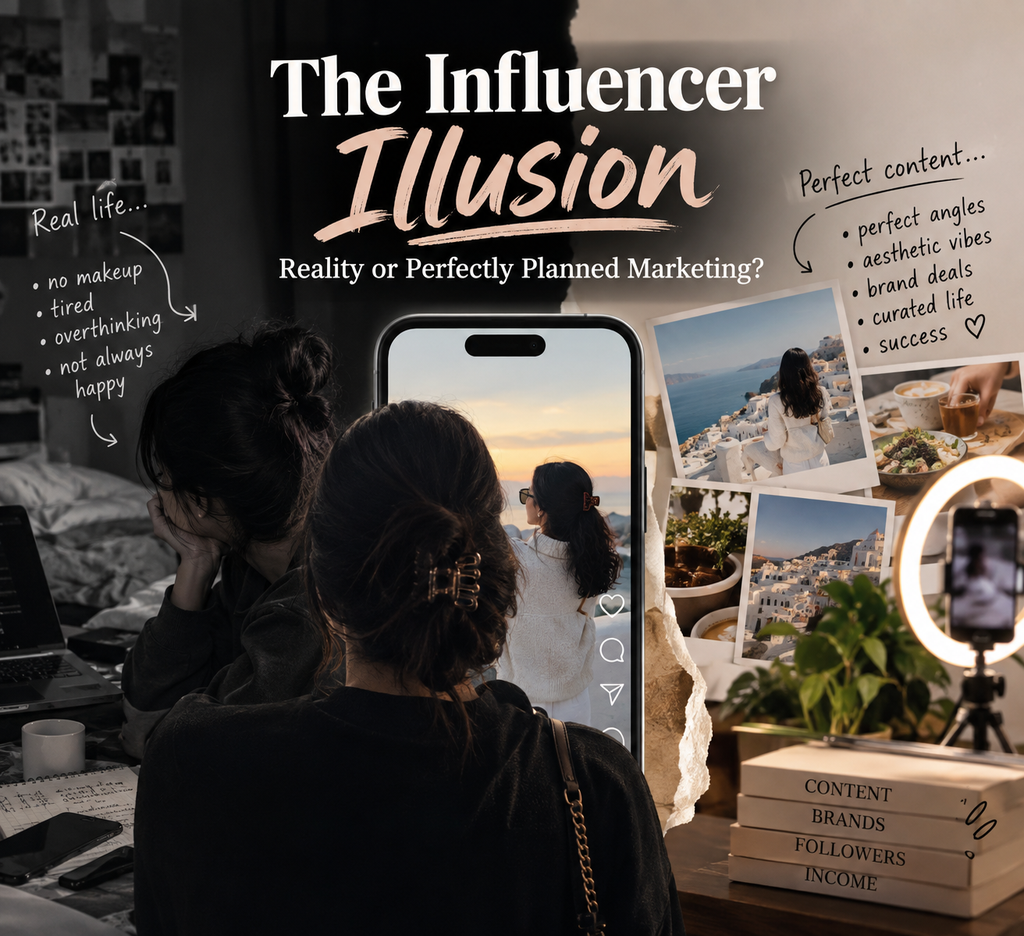
The Influencer Illusion: Reality or Perfectly Planned Marketing?
Social media has transformed the way people communicate, shop, entertain themselves, and even define success. Platforms such as Instagram, YouTube, TikTok, and Facebook have created a new kind of public figure: the social media influencer. Influencers often share their daily routines, fashion choices, travel experiences, food, relationships, fitness journeys, and personal opinions with thousands or millions of followers.
At first glance, influencer content may appear spontaneous and authentic. A beautifully arranged breakfast, a luxury vacation, a perfect outfit, or a “day in my life” video can make viewers feel as though they are getting a genuine glimpse into someone’s everyday world. But behind many of these posts is a carefully planned process involving photography, editing, branding, audience research, sponsorships, and marketing strategies.
This raises an important question: Is the influencer lifestyle a genuine reflection of reality, or is it a carefully created marketing illusion?
The Rise of Influencer Culture
Influencer culture grew rapidly with the popularity of social media. Traditional advertising once depended mainly on television, newspapers, magazines, billboards, and celebrities. Today, brands can reach highly specific audiences through individual creators.
An influencer is not simply someone with a large number of followers. Influencers build relationships with their audiences and develop a particular identity or niche. Some focus on fashion, while others specialize in beauty, fitness, food, travel, technology, education, gaming, or lifestyle content.
Their influence comes from the perception that they are relatable and trustworthy. Instead of a company directly saying, “Buy this product,” an influencer might demonstrate how they use it in their everyday life. This makes advertising feel more personal.
As a result, influencer marketing has become a major part of modern digital marketing.
The Perfect Life on Social Media
One of the biggest characteristics of influencer content is selective presentation. Social media rarely shows an entire life. Instead, it shows carefully selected moments.
An influencer might post a picture of a beautiful hotel room, but followers may not see the hours spent traveling to reach the destination. A fitness influencer may share an impressive transformation photo but not show the difficult days, setbacks, or personal circumstances behind it.
Similarly, a “perfect morning routine” video might involve planning the location, lighting, camera angles, clothing, music, editing, and several takes.
This does not automatically mean that the content is fake. The experience may have genuinely happened. However, the version presented online is often a carefully edited version of reality.
The Business Behind the Lifestyle
Influencing has developed into a professional industry. For many creators, social media is not simply a hobby—it is a business.
Influencers can earn money through sponsored posts, brand collaborations, affiliate marketing, advertisements, product launches, subscriptions, digital products, and other forms of monetization.
This means that content often has a commercial purpose.
For example, an influencer may post a skincare routine featuring a particular product. The video may look like a normal personal recommendation, but the influencer could have received payment or another benefit from the brand.
This is why sponsored content should be clearly disclosed. Audiences deserve to know when someone is being paid to promote something.
The challenge is that modern advertising is often designed to look natural. The advertisement may be integrated into a story, vlog, tutorial, or personal recommendation rather than appearing as a traditional advertisement.
Authenticity as a Marketing Strategy
Interestingly, authenticity itself has become a marketing tool.
Influencers understand that audiences do not always want perfect celebrities. People often prefer creators who appear honest, relatable, and imperfect.
Because of this, influencers may intentionally show small mistakes, emotional moments, casual clothing, messy rooms, or behind-the-scenes content.
These moments can make an influencer appear more genuine.
However, even “authentic” content can be planned.
A creator may decide what to reveal, what to hide, which camera angle to use, and how to edit the final video. Therefore, authenticity on social media can sometimes be strategically created.
This does not mean that every emotional or personal post is fake. It simply means that social media content should be understood as a form of communication where creators have control over what audiences see.
The Psychology of Comparison
The influencer illusion becomes especially powerful because people naturally compare themselves with others.
When users repeatedly see influencers with expensive clothes, beautiful homes, perfect bodies, luxurious vacations, successful careers, and seemingly happy relationships, they may begin to believe that such lifestyles are normal.
But social media usually presents the highlight reel, not the complete story.
A person may compare their ordinary Monday morning with someone else’s carefully photographed holiday. They may compare their natural appearance with professionally edited images. They may compare their income with influencers who earn money through brand partnerships.
Such comparisons can create unrealistic expectations.
People may begin to feel that they are not attractive enough, successful enough, wealthy enough, or interesting enough.
Filters, Editing, and Artificial Perfection
Technology has made it easier than ever to change photographs and videos.
Filters can change skin texture, facial features, body proportions, lighting, and colors. Editing applications can remove unwanted objects, improve backgrounds, reshape images, and create a more polished appearance.
This can create a gap between online appearance and offline reality.
The problem becomes more serious when audiences do not realize how much editing has been used. Young people, in particular, may believe that highly edited appearances represent normal human beauty.
This can contribute to unrealistic beauty standards and dissatisfaction with one’s natural appearance.
However, it is also important to remember that not every edited photograph is deceptive. Photography naturally involves lighting, composition, color correction, and editing. The key issue is whether the presentation creates a misleading impression.
Influencers and Consumer Behaviour
Influencers can have a powerful impact on what people buy.
A recommendation from a creator whom followers trust can feel more convincing than a traditional advertisement. Followers may think, “If this person uses it, maybe I should try it too.”
This is particularly effective because influencer marketing combines entertainment, personal storytelling, and advertising.
For example, a fashion creator might style a particular brand of clothing. A food creator might review a restaurant. A technology creator might demonstrate a smartphone. A beauty creator might show a makeup tutorial.
The product becomes part of the content rather than being presented separately as an advertisement.
This makes influencer marketing highly effective, but it also makes transparency extremely important.
Is Everything Fake?
It would be unfair to say that all influencers create fake lifestyles.
Many influencers genuinely share their experiences, work hard to create valuable content, and maintain honest relationships with their audiences. Some openly discuss their struggles, failures, financial realities, and behind-the-scenes experiences.
There are also creators who use their platforms for education, social awareness, entrepreneurship, creativity, and positive community building.
The problem is not necessarily influencers themselves. The bigger issue is how audiences interpret social media content.
A carefully created photograph can still represent a real experience. A sponsored product can still be genuinely useful. A successful influencer can still experience insecurity and failure.
The important thing is to recognize that social media is a curated environment.
How Audiences Can Become More Media-Literate
The best way to deal with the influencer illusion is not to stop using social media completely. Instead, users should develop media literacy.
Before believing or purchasing something because an influencer recommends it, viewers can ask:
- Is this sponsored content?
- Is the influencer receiving payment or free products?
- Does the creator have expertise in this area?
- Is the claim supported by reliable information?
- Could the image or video be edited?
- Am I comparing my real life with someone’s carefully selected online moments?
- Does this content make me feel informed or simply pressured to buy something?
These questions help audiences become more critical consumers of digital content.
The Positive Side of Influencer Marketing
Influencer culture is not entirely negative. It has created opportunities that did not exist before.
Small businesses can collaborate with local creators to reach customers. New creators can build careers without depending on traditional media companies. Artists, educators, photographers, designers, and entrepreneurs can showcase their talents directly to audiences.
Influencers can also raise awareness about important social issues and encourage positive behaviours.
The key is responsible content creation. Influencers should be transparent about advertisements, avoid misleading claims, and understand the impact their content can have on their followers.
The Future of Influencer Culture
Influencer marketing will likely continue to grow as social media platforms become more advanced.
Artificial intelligence, virtual influencers, augmented reality, personalized advertising, and new content formats may make digital identities even more sophisticated.
In the future, it may become increasingly difficult to distinguish between spontaneous content, professional advertising, and AI-generated media.
This makes digital literacy more important than ever.
Consumers will need to look beyond attractive visuals and viral trends. They will need to understand why a particular piece of content was created and what the creator or brand wants the audience to do.
Conclusion
The influencer lifestyle is neither completely real nor completely fake. It is better understood as a curated version of reality.
Influencers choose what to show, how to present it, and sometimes how to monetize it. Behind the perfect photographs and entertaining videos are often planning, editing, branding, sponsorships, and marketing strategies.
The biggest danger is not that influencers create attractive content. The danger is when audiences forget that social media is only a small window into someone’s life.
A beautiful feed does not necessarily mean a perfect life. A luxury lifestyle does not necessarily mean financial security. A perfect body does not necessarily mean perfect health. And a sponsored recommendation does not automatically mean a bad product—but it should be recognized as advertising.
Ultimately, the solution is awareness rather than distrust. We can enjoy influencer content while remembering that what we see online is usually a selected and carefully presented version of reality.
The real question, therefore, is not simply “Are influencers fake?” It is:
“How much of what we see is reality—and how much has been created to influence what we think, feel, and buy?”