
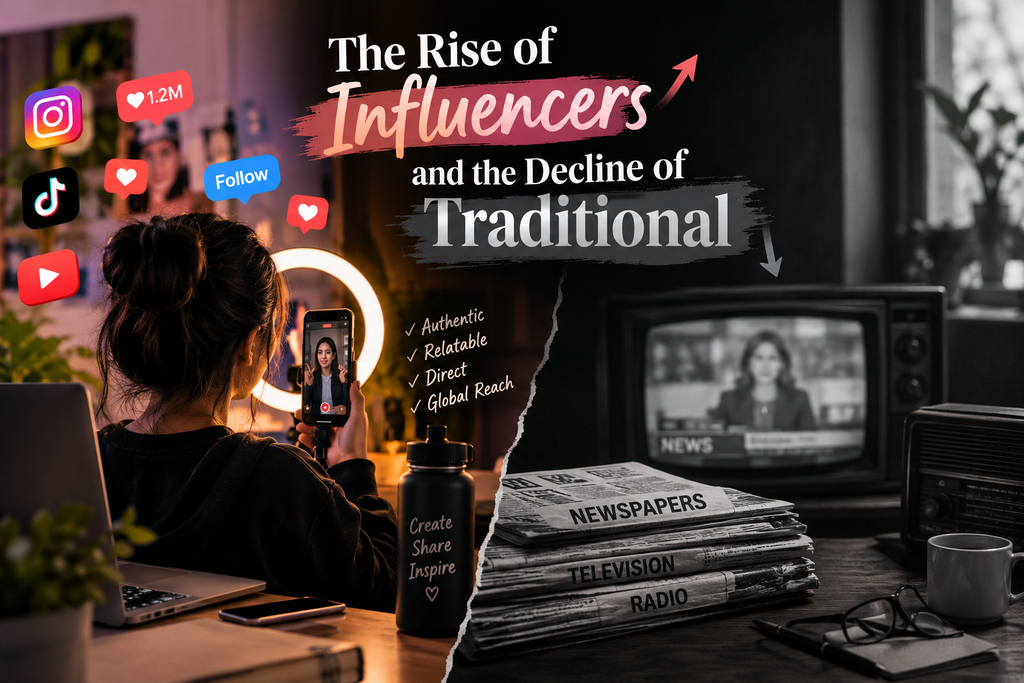
The Rise of Influencers and the Decline of Traditional
Introduction
The way people consume information, entertainment, and advertisements has changed dramatically in the digital age. For decades, traditional media such as newspapers, television, radio, and magazines were the main sources of information and entertainment. Businesses depended heavily on these platforms to reach large audiences and promote their products. However, the growth of social media has transformed this system.
Today, influencers have become powerful voices in the digital world. People follow influencers on platforms such as Instagram, YouTube, TikTok, and Facebook for entertainment, advice, product recommendations, lifestyle content, education, and personal opinions. Instead of depending only on celebrities or traditional advertisements, brands increasingly collaborate with influencers who have strong relationships with specific audiences.
This shift does not necessarily mean that traditional media has completely disappeared. Rather, its influence has declined in many areas as audiences increasingly prefer digital, personalized, and interactive content. The rise of influencers represents one of the biggest changes in modern communication and marketing.
- The Growth of Social Media
The rise of influencers is closely connected to the rapid growth of social media. Platforms such as Instagram, YouTube, TikTok, and Facebook have made it possible for ordinary individuals to create content and reach thousands or even millions of people.
In the past, becoming a public figure usually required support from television channels, newspapers, film industries, radio stations, or publishing companies. Social media has removed many of these barriers. Anyone with a smartphone, creativity, and internet access can potentially build an audience.
This has created a new type of celebrity: the social media influencer. Influencers may specialize in fashion, beauty, food, travel, fitness, technology, gaming, education, comedy, or lifestyle content. Their influence comes not only from popularity but also from the relationship they develop with their followers.
- What Makes Influencers Powerful?
One of the biggest strengths of influencers is their ability to create a personal connection with their audience. Traditional advertisements often feel like direct attempts to sell something. Influencer content, on the other hand, can feel more like a recommendation from a familiar person.
For example, a beauty influencer might demonstrate how they use a particular skincare product. A food creator may visit a restaurant and share their experience. A technology creator may review a smartphone and explain its advantages and disadvantages.
Followers often feel that they know the influencer because they regularly see their videos, stories, opinions, and daily activities. This familiarity can create trust and make recommendations more persuasive.
- From Celebrities to Everyday Creators
Influencer culture has also changed the meaning of celebrity. Traditional celebrities were usually actors, musicians, athletes, or television personalities. Today, someone can become famous by consistently creating interesting content online.
This has given ordinary people an opportunity to build personal brands. A person who starts by making simple videos from home can eventually attract thousands of followers and work with major companies.
The growth of micro-influencers is particularly important. Micro-influencers may have smaller audiences, but their followers are often highly interested in a specific topic. For brands, this can be more valuable than reaching a huge but less targeted audience.
- The Decline of Traditional Advertising
Traditional advertising includes television commercials, newspaper advertisements, radio promotions, billboards, and magazine advertisements. These methods can still be effective, especially for reaching large audiences. However, they face increasing competition from digital marketing.
One major problem with traditional advertising is limited interaction. A television advertisement may reach millions of viewers, but viewers cannot immediately comment, share, ask questions, or purchase the product directly from the advertisement.
Digital platforms offer a different experience. A social media post can receive likes, comments, shares, saves, and direct messages. A potential customer can often click a link and immediately visit a website or product page.
This combination of content, interaction, and purchasing makes influencer marketing attractive to modern businesses.
- Changing Consumer Behavior
Consumer behavior has changed significantly because of smartphones and social media. People no longer have to wait for a particular television program or newspaper to receive information. News, reviews, entertainment, and recommendations are available at any time.
Consumers also increasingly search for opinions before purchasing products. They may watch YouTube reviews, Instagram Reels, TikTok videos, or creator recommendations before making a decision.
Influencers play an important role in this process because they often explain products in an accessible and relatable way. Instead of simply saying that a product is good, they may demonstrate how it works, compare it with alternatives, and share their personal experience.
- Authenticity and Relatability
Authenticity is one of the major reasons influencers have become successful. Audiences often prefer content that feels natural rather than highly polished.
Traditional advertisements are usually carefully planned, professionally produced, and edited. While this can create a high-quality image, it can sometimes feel distant from ordinary consumers.
Influencers often communicate in a more casual style. They may speak directly to the camera, share behind-the-scenes moments, discuss personal experiences, or respond to followers’ comments.
This sense of relatability can make audiences feel connected to the creator. However, authenticity can become complicated when influencers promote sponsored products. Audiences may question whether an influencer genuinely likes a product or is recommending it because they are being paid.
- Influencer Marketing and Brands
Businesses have recognized the marketing potential of influencers. Instead of spending their entire advertising budget on television, newspapers, or billboards, many brands now invest in social media campaigns.
Influencer marketing allows businesses to target specific audiences. A fitness company can work with fitness creators, a beauty brand can collaborate with beauty influencers, and a restaurant can partner with food creators.
This targeted approach can be more relevant than traditional mass advertising. Brands can also track digital performance through metrics such as views, engagement, clicks, conversions, and sales.
As a result, influencers have become an important part of modern digital marketing strategies.
- The Role of Short-Form Content
Short-form videos have accelerated the growth of influencer culture. Instagram Reels, TikTok videos, and YouTube Shorts allow creators to communicate ideas within seconds or a few minutes.
These formats are easy to consume and highly shareable. A creator can reach a large audience without having a television program, newspaper column, or professional production team.
Short-form content has also changed advertising. Brands increasingly integrate products into entertaining videos rather than relying only on traditional advertisements.
For example, a creator might include a clothing brand naturally within a fashion video, or a food creator might feature a restaurant as part of a review. The advertisement becomes part of the content itself.
- Traditional Media Is Adapting
Although traditional media has declined in influence, it has not completely disappeared. Newspapers, television channels, radio stations, and magazines continue to serve important audiences.
Many traditional media organizations have adapted by moving online. Newspapers now operate websites, mobile applications, podcasts, YouTube channels, and social media accounts. Television networks also publish digital content and livestream programs.
Traditional media organizations have also started working with digital creators and influencers. This shows that the future may not be a complete replacement of traditional media by influencers. Instead, both forms may continue to exist while becoming increasingly connected.
- Challenges of Influencer Culture
Despite its advantages, influencer marketing has several challenges. One major concern is misinformation. Influencers may discuss subjects without having professional knowledge or reliable evidence.
Another issue is undisclosed advertising. When influencers receive payment or free products from companies, audiences should be able to understand that the content is promotional.
There is also pressure to maintain a perfect online image. Some influencers carefully select what they show, creating an idealized version of their lives. Followers may compare themselves with these images and develop unrealistic expectations.
Influencer culture can therefore be powerful, but audiences need to consume content critically.
- The Future of Media
The future of media is likely to become increasingly digital, personalized, and interactive. Audiences will continue to expect content that is convenient, entertaining, and relevant to their interests.
Influencers will probably remain important because they combine entertainment, personal branding, community building, and marketing. At the same time, traditional media can continue to compete through credibility, professional journalism, established audiences, and high-quality production.
The strongest media strategies may combine both worlds. A news organization can use professional journalism while distributing stories through social media creators. A brand can use television advertising for broad awareness while working with influencers for targeted engagement.
Conclusion
The rise of influencers and the decline of traditional media represent a major transformation in the way society communicates. Social media has given individuals the ability to build large audiences without depending on traditional media organizations. Influencers have become trusted voices because of their relatability, accessibility, and direct relationships with followers.
At the same time, traditional media has faced challenges from changing consumer habits, digital competition, and the demand for immediate and interactive content. However, traditional media is not disappearing completely. Instead, it is adapting to the digital environment.
The future of communication will likely involve a combination of influencers, social media platforms, traditional journalism, digital publishers, and brands. The most successful communicators will be those who understand their audiences and provide valuable, authentic, and engaging content.
Ultimately, the rise of influencers is not simply about people becoming famous on social media. It represents a fundamental shift from mass communication to personal and community-driven communication. As technology continues to evolve, the relationship between influencers, brands, traditional media, and audiences will continue to shape the future of marketing and communication.