
The Rise of Memes in Digital Marketing
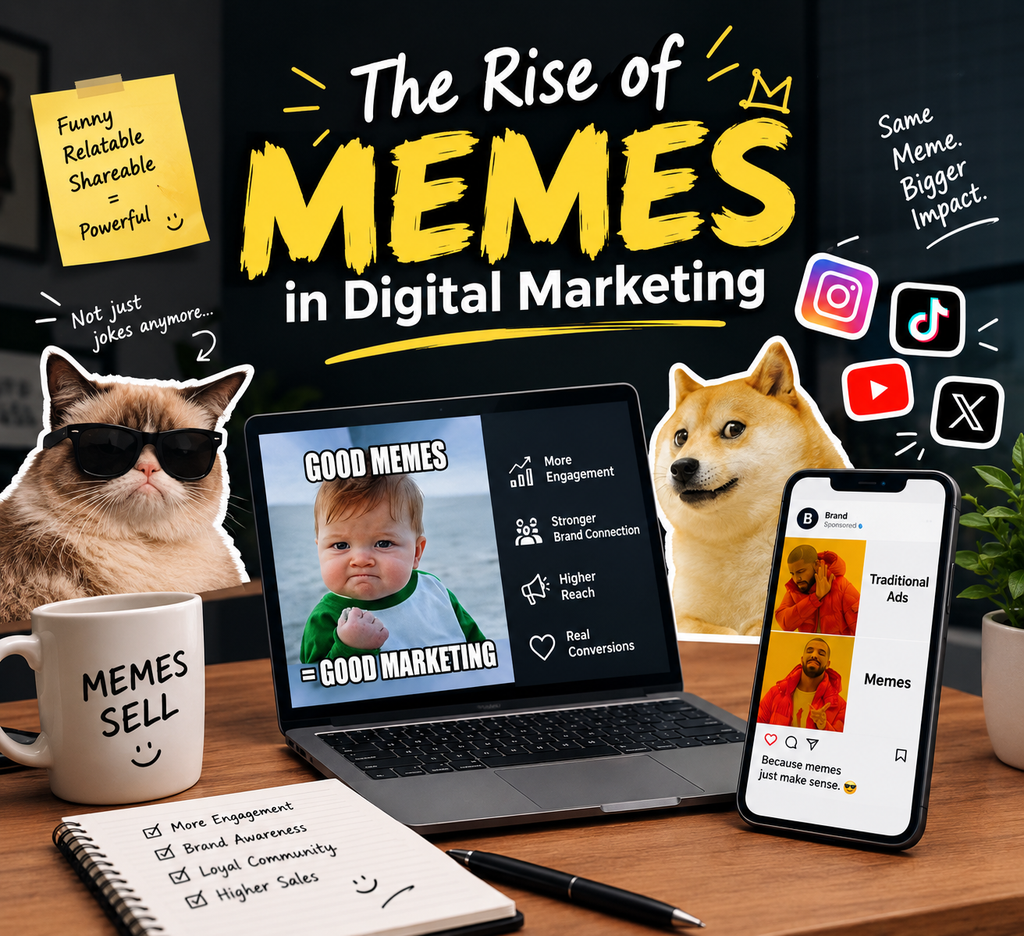
The Rise of Memes in Digital Marketing
In the modern digital world, memes have become much more than simple internet jokes. They have developed into a powerful form of communication and an effective marketing tool for businesses, brands, influencers, and content creators. A funny picture, short video, relatable sentence, or popular reaction can reach millions of people within a very short period of time. Because of this ability to attract attention and encourage sharing, memes have become an important part of digital marketing.
Traditional advertisements often focus on directly promoting a product or service. Memes work differently. They entertain people first and promote a brand indirectly. Instead of making audiences feel that they are watching an advertisement, successful meme marketing makes them feel that they are participating in an online conversation. This makes brands appear more relatable, human, and connected to their audiences.
What Are Memes?
A meme is a piece of digital content that spreads rapidly from person to person, usually through social media and online communities. Memes can include images, videos, GIFs, captions, jokes, popular phrases, or recognizable situations.
The most successful memes are usually simple and easy to understand. They often represent common experiences, emotions, problems, or funny situations that many people can relate to.
For example, a meme about students struggling before an examination can be understood by millions of students. A brand can use that same relatable situation to introduce its product or service in a humorous way.
The ability of memes to communicate an idea quickly is one of the main reasons they are valuable in digital marketing.
From Internet Jokes to Marketing Strategy
Initially, memes were mainly created for entertainment and shared among internet users. However, marketers gradually recognized that memes had something traditional advertisements often struggled to achieve: attention and engagement.
People naturally scroll through large amounts of content on social media. Traditional advertisements may be ignored because users immediately recognize them as promotional content. Memes, on the other hand, can interrupt this scrolling behavior because they are entertaining, unexpected, and relatable.
As social media platforms grew, businesses started incorporating meme culture into their marketing strategies. Today, brands use memes on platforms such as Instagram, Facebook, TikTok, YouTube, and X to communicate with younger audiences and participate in current online conversations.
Why Meme Marketing Works
One of the biggest reasons meme marketing works is relatability.
People enjoy content that reflects their own experiences. When someone sees a meme and thinks, “This is exactly me,” they are more likely to like, comment on, tag a friend, or share it.
For marketers, this creates valuable engagement.
For example, a food-delivery company might create a meme about feeling hungry late at night. Instead of directly saying, “Order food from us,” the brand can create a funny situation that naturally reminds people about ordering food.
The advertisement becomes entertainment, and the product becomes part of the joke.
The Power of Humor
Humor is one of the strongest tools in marketing because people naturally enjoy content that makes them laugh.
A funny advertisement can create a positive emotional connection between a customer and a brand. When people associate a brand with enjoyable experiences, they may be more likely to remember it.
Memes are particularly effective because humor can communicate a message in only a few seconds. This is especially important on social media, where users have short attention spans and are constantly exposed to new content.
Instead of explaining a product through a long advertisement, a brand can sometimes communicate its personality through one clever meme.
Memes Increase Engagement
Engagement is an important measurement in digital marketing. Likes, comments, shares, saves, mentions, and views help brands understand how audiences respond to their content.
Memes are naturally designed for interaction.
A relatable meme can encourage users to tag friends. A funny meme may be shared in group chats. A controversial or highly relatable meme may generate discussions in the comments.
This means one piece of content can reach audiences far beyond the brand’s existing followers.
When people voluntarily share branded content, they effectively become part of the brand’s marketing process.
The Role of Social Media Trends
Meme marketing is closely connected to social media trends.
Internet culture changes extremely quickly. New jokes, sounds, challenges, phrases, and formats can become popular within hours. Brands that understand these trends can sometimes participate while the topic is still receiving attention.
This practice is often called trendjacking or newsjacking, depending on the context.
For example, when a particular meme format becomes popular, a brand may adapt the format to its industry. A clothing brand might use it to talk about shopping, while a food brand could use the same format to discuss hunger.
However, brands need to understand the context before using a trend. Using a meme incorrectly can make a brand appear out of touch rather than relatable.
Building a Human Brand Personality
Traditional advertisements often make companies appear formal and distant. Meme marketing can change that image.
When a company posts a funny or relatable meme, audiences may see the people and personality behind the brand.
This is particularly useful for brands targeting younger consumers. Younger audiences often prefer companies that communicate naturally rather than sounding overly corporate.
A brand that can joke about everyday situations may appear more approachable and authentic.
This does not mean every company needs to become humorous. The type of humor should match the brand’s identity, audience, and values.
Cost-Effective Marketing
Another advantage of meme marketing is that it can be relatively inexpensive.
A traditional advertising campaign may require professional photography, actors, locations, equipment, designers, and large advertising budgets. A meme can sometimes be created with a simple image, short video, or existing format.
This makes meme marketing especially attractive to small businesses and new brands with limited budgets.
However, low production cost does not mean low strategic value. A successful meme still requires creativity, timing, audience understanding, and careful execution.
Memes and Brand Awareness
Brand awareness refers to how familiar consumers are with a particular brand.
Memes can help increase awareness because highly shareable content can introduce a brand to people who have never followed it before.
Imagine a user shares a branded meme with ten friends. Some of those friends may visit the company’s profile. If they enjoy the content, they may follow the account or explore its products.
Therefore, a single meme can become an entry point into a brand’s wider digital ecosystem.
Examples of Meme Marketing
Several well-known brands have successfully incorporated humor and internet culture into their social media strategies.
Brands such as Wendy’s became widely recognized for humorous and sometimes playful social-media communication. Netflix frequently uses memes, reaction images, and references from its shows to communicate with audiences.
Duolingo has also become known for its humorous social media personality, particularly through short-form video content.
These examples demonstrate an important principle: successful meme marketing is not simply about copying popular jokes. It is about developing a recognizable brand voice that audiences enjoy.
The Importance of Timing
Timing is extremely important in meme marketing.
A meme can be highly popular today and almost completely forgotten a few weeks later. If a brand responds too slowly, the content may no longer feel relevant.
However, speed should not come at the expense of judgment.
Brands should consider whether a trend is appropriate for their audience and whether participating could negatively affect their reputation.
The best meme marketing combines speed with strategy.
Risks and Challenges
Although memes can be powerful, they also have risks.
Internet humor can be misunderstood easily. A joke that seems funny to one audience may be offensive or inappropriate to another. Cultural differences can also change the meaning of a meme.
Another problem is copyright. Brands should be careful when using images, videos, characters, music, or other material that they do not own or have permission to use.
There is also the risk of trying too hard. If a brand constantly copies internet trends without understanding them, audiences may consider the content forced or inauthentic.
Therefore, brands need to balance creativity with responsibility.
Meme Marketing and Consumer Psychology
Meme marketing works partly because it connects with human psychology.
People naturally enjoy recognition, humor, belonging, and social interaction. When users share a meme, they are often communicating something about themselves.
For example, sharing a meme about student life can tell friends, “This represents my experience.”
Brands can become part of this communication process by creating content that reflects the experiences and interests of their target audiences.
This makes meme marketing more than advertising. It becomes a form of cultural participation.
The Future of Meme Marketing
As social media continues to evolve, memes are likely to remain an important part of digital communication.
Short-form videos, AI-generated content, interactive memes, personalized content, and new social media platforms will continue to change the way memes are created and shared.
Brands will need to understand internet culture rather than simply copying whatever is trending.
The future of meme marketing will probably focus increasingly on community, personalization, creativity, and authenticity.
Companies that understand their audiences will be better positioned to create memes that feel natural rather than purely promotional.
Conclusion
The rise of memes in digital marketing shows how dramatically online communication has changed. Memes have transformed from simple internet jokes into powerful tools for attracting attention, increasing engagement, building brand awareness, and creating emotional connections with audiences.
Their strength comes from their simplicity, humor, relatability, and shareability. Unlike traditional advertising, memes can make people laugh before they realize they are interacting with branded content.
However, successful meme marketing requires more than copying popular images. Brands need to understand their audience, recognize trends, use appropriate humor, respond at the right time, and maintain their own identity.
Ultimately, memes demonstrate an important lesson in modern marketing: people do not always want to be sold to—they want to be entertained, understood, and connected.
When brands successfully combine entertainment with their marketing message, a simple meme can become much more than a joke. It can become a conversation, a community connection, and sometimes a powerful marketing opportunity.